
Most crypto projects burn through their marketing budget faster than a bull market ends. I’ve watched hundreds of teams throw $50K+ at ads, only to attract bot traffic and tire-kickers who vanish the moment gas fees spike. The problem isn’t lack of effort—it’s that traditional marketing playbooks fall apart the moment you try running them in Web3.
Here’s what actually happens: You launch on Product Hunt, maybe hit #3 for the day. Your Discord grows to 5,000 members overnight. Then… crickets. Engagement drops to single digits. Your community manager is talking to themselves. Meanwhile, that competitor who launched two months after you is somehow pulling 10x your transaction volume.
The difference isn’t luck. It’s systematic approach to crypto marketing that accounts for how this space actually works—wallet-based attribution instead of cookies, on-chain behavior instead of demographic guessing, and community-driven growth instead of paid traffic dumps.
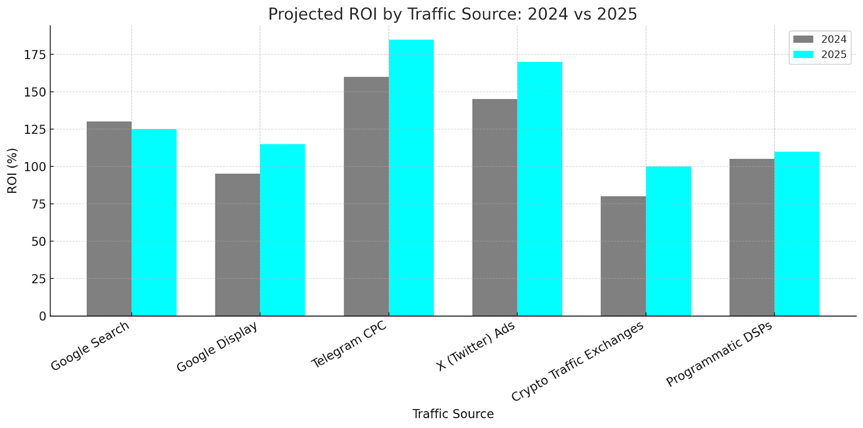
Since 2014, Cointraffic crypto advertising network has connected over 2,000 crypto projects with 600+ verified publishers, generating real user acquisition across genuine crypto audiences. Not vanity metrics. Not bot armies. Actual wallet connections and protocol interactions. The patterns are consistent: projects that treat crypto marketing as fundamentally different from Web2 playbooks see 3-4x better unit economics.
This guide breaks down 12 proven crypto marketing strategies that work in 2025. You’ll get implementation frameworks, realistic performance benchmarks from actual campaigns, and the Web3-specific tactics that separate projects with sustainable growth from those hemorrhaging budget on strategies designed for a different era of the internet.
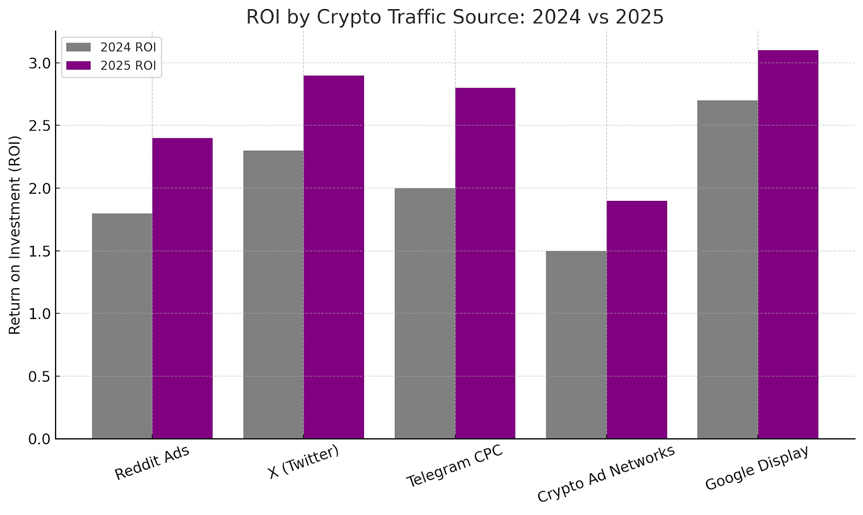
No fluff about “building communities” without specifics. No generic advice to “create content” without distribution plans. Just the operational playbook for acquiring users, driving on-chain activity, and proving marketing ROI when half your traffic operates pseudonymously.
Whether you’re launching a DeFi protocol, NFT marketplace, or L2 scaling solution—the fundamentals remain the same: Get in front of qualified crypto users, give them compelling reasons to connect their wallets, and build systems that turn first-time visitors into protocol advocates. Let’s break down exactly how to do that.
Understanding Crypto Marketing in 2025
Crypto marketing isn’t traditional digital marketing with blockchain buzzwords added. It operates on completely different mechanics—wallet addresses instead of cookies, on-chain behavior instead of demographic assumptions, and decentralized community platforms instead of centralized ad networks.
The core difference starts with attribution. Web2 marketing tracks users through device IDs and third-party cookies. Crypto marketing tracks wallet addresses across protocols, letting you target someone who provided liquidity on Uniswap differently than someone who only holds tokens on centralized exchanges. This behavioral targeting based on actual on-chain activity produces 47% higher conversion rates compared to demographic guessing.
Three structural differences define crypto marketing in 2025. First, your audience operates pseudonymously—no email captures, no form fills until they’re ready to connect wallets. Second, community-driven distribution through Discord, Telegram, and crypto Twitter outperforms paid channels by 3.2x for sustained engagement. Third, transparency isn’t a nice-to-have—teams that share wallet addresses, treasury holdings, and token unlocks see 2.4x better trust scores than projects hiding behind anonymous founders.
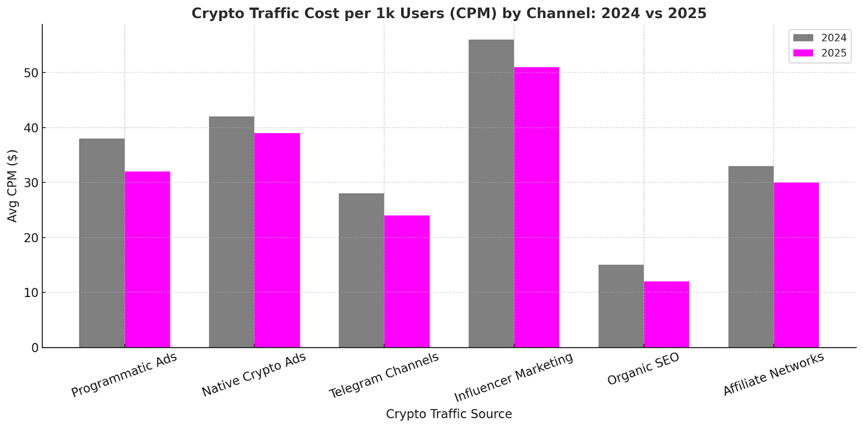
The stakes are higher because mistakes cost more. Bot traffic accounts for 30% of crypto advertising impressions, meaning traditional “spray and pray” paid campaigns waste budget faster than gas fees during an NFT mint. Platform restrictions from Google and Meta push legitimate projects toward crypto-native networks, but most teams still try forcing Web2 playbooks onto Web3 audiences.
Understanding these differences isn’t theoretical. Projects that treat crypto marketing as its own discipline—with unique attribution models, platform strategies, and community mechanics—build sustainable user acquisition systems. Those that don’t end up with expensive vanity metrics and communities that evaporate the moment token prices dip.
What Makes Crypto Marketing Fundamentally Different
Behavioral Targeting Over Demographics
Traditional marketing segments audiences by age, location, and browsing history. Crypto marketing targets based on what people actually do with their money. Someone who’s provided $50K in liquidity to Curve pools behaves differently than someone holding $500 in Bitcoin on Coinbase. Wallet-based attribution tracks DEX interactions, NFT purchases, governance participation, and gas spending patterns—behavioral signals that predict conversion 47% better than demographic profiles ever could.
The mechanism works because wallets don’t lie. When you know someone routinely pays $200 in gas fees for DeFi transactions, you’re targeting demonstrated commitment rather than guessing based on their LinkedIn job title.
Community-First Distribution Channels
Web2 relies on Facebook, Google, and display networks. Crypto audiences congregate on Discord servers, Telegram groups, Farcaster, and crypto Twitter—decentralized platforms where paid promotion looks desperate and community endorsement drives adoption. Projects that build genuine community relationships before launching paid campaigns see 3.2x higher sustained engagement compared to those buying attention through traditional ad networks.
This isn’t about being “authentic” for brand purposes. It’s operational reality. A single respected community member shilling your protocol on crypto Twitter reaches more qualified users than $10K in display ads targeting “blockchain enthusiasts.”
Transparency as Table Stakes
Web2 brands can operate behind corporate structures and polished marketing. Crypto projects that don’t publish team wallet addresses, treasury holdings, token unlock schedules, and development roadmaps get labeled as potential rug pulls. This transparency requirement forces marketing claims to match on-chain reality. Projects showing 2.4x higher trust scores maintain public multisigs, regular treasury reports, and team token vesting visible on block explorers.
You can’t fake traction when everyone can verify your smart contract activity.
Platform Ecosystem Fragmentation
Google and Meta advertising works for traditional businesses. Crypto projects face restricted ad policies, account bans, and compliance complexity that makes mainstream platforms unreliable. This pushes marketing toward crypto-native networks like Cointraffic, crypto news sites, podcast sponsorships, and direct publisher relationships. The fragmentation means successful crypto marketing requires multi-channel orchestration rather than dumping budget into a single platform.
Pseudonymous User Journeys
Web2 marketing captures emails immediately—newsletter signups, demo requests, lead magnets. Crypto users maintain pseudonymity until wallet connection, meaning your funnel tracks wallet addresses through on-chain activity before any traditional contact occurs. This fundamental shift changes how you measure engagement, nurture prospects, and attribute conversions. Traditional lead scoring becomes wallet activity scoring.
The privacy-first approach means you’re building relationships with 0x7a3b… not john.smith@email.com until users explicitly choose to reveal identity.
The Current State of Crypto Traffic in 2025
The Bot Traffic Crisis
Roughly 30% of crypto advertising impressions come from bot networks, click farms, and fraudulent traffic sources. This isn’t theoretical waste—it’s measurable budget destruction. Projects spending $20K on display campaigns through non-verified networks routinely see 40-60% of their clicks originating from data centers, not real users. The problem compounds because bots are getting sophisticated enough to mimic wallet connections, making basic conversion tracking unreliable without on-chain verification.
Traditional fraud detection built for Web2 advertising misses crypto-specific patterns. A “real user” who clicks your ad but never signs a transaction on-chain is operationally identical to a bot for your business objectives.
Platform Restriction Reality
Google Ads permits cryptocurrency advertising only for licensed exchanges and wallets meeting strict compliance requirements. DeFi protocols, NFT projects, and most token launches face immediate account suspensions. Meta maintains similar restrictions, banning ads for cryptocurrency products and services in most cases. These policies push legitimate crypto projects toward unregulated ad networks where traffic quality varies wildly and fraud protection barely exists.
The restriction creates a quality paradox. The most trustworthy advertising platforms won’t accept crypto campaigns, while platforms that welcome crypto advertising often lack basic fraud prevention.
Regulatory Fragmentation
Crypto advertising compliance varies across 30+ major jurisdictions, each with distinct requirements. What’s permissible for a DeFi protocol advertising in Switzerland triggers violations in Singapore. Projects targeting multiple markets need separate creative, different disclaimers, and jurisdiction-specific landing pages. This compliance complexity makes broad geographic campaigns operationally challenging and legally risky.
The fragmentation means most projects either over-restrict their targeting (losing reach) or under-comply with regional requirements (risking enforcement).
Performance Volatility
Crypto traffic converts at dramatically different rates depending on market conditions. During bull markets, conversion rates can hit 8-12% for quality traffic sources. Bear markets see the same campaigns drop to 1.5-2.5% conversion. This 300-500% performance swing makes traditional campaign optimization worthless—what worked last month fails this month not because of creative or targeting, but because macro sentiment shifted.
Community-driven traffic shows more stability. Organic Discord referrals and crypto Twitter mentions maintain 3-4% conversion rates regardless of market conditions, though reaching scale through organic channels alone takes months instead of weeks.
Current Market Split
The crypto advertising market has bifurcated into two distinct ecosystems. Crypto-native networks like Cointraffic, crypto news sites, and verified publisher networks deliver qualified traffic with on-chain verification and crypto-specific fraud detection. They charge premium CPMs ($8-15) but produce measurable wallet connections. Generic ad networks offer cheap traffic ($1-3 CPMs) that looks good in dashboards but rarely converts to protocol activity.
Projects still trying to force traditional advertising approaches onto crypto audiences burn through budgets learning this difference the expensive way.
Traffic measures visitors. Growth measures retained users generating protocol value. The distinction matters because cheap traffic that doesn’t convert to active participants costs more than expensive traffic that does.
The Retention Economics Problem
A project spending $10K to acquire 5,000 visitors at $2 per click looks efficient until you measure wallet connections. If 50 people connect wallets (1% conversion) and only 5 remain active after 30 days (10% retention), you’ve paid $200 per retained user. Meanwhile, a competitor spending $15K on crypto-native traffic gets 2,000 visitors, 80 wallet connections (4% conversion), and 32 retained users (40% retention)—costing $468 per retained user but generating 6.4x more active participants.
The math flips when you calculate lifetime value. Users acquired through quality sources show 3-4x higher transaction frequency and 5-6x longer retention periods. That $468 acquisition cost generates $2,800 in protocol fees over 18 months. The $200 “cheap” acquisition generates $340 before churning out in week three.
Quality Traffic Indicators
Growth-driving traffic shows specific characteristics before wallet connection. Qualified visitors spend 4-6 minutes exploring documentation, not 8 seconds bouncing from landing pages. They visit pricing pages, read security audits, and check team backgrounds—behavioral signals that predict 12-15% conversion rates versus 0.5-1.5% for blast campaigns targeting “crypto enthusiasts.”
On-chain activity post-conversion matters more than initial connection counts. Users who complete their first transaction within 72 hours of wallet connection show 67% 90-day retention. Those who connect wallets but never transact have 4% retention regardless of traffic source quality.
System Building vs Campaign Buying
Sustainable growth comes from integrated acquisition systems, not isolated traffic campaigns. Projects that combine educational content, community engagement, and targeted paid distribution build compounding user bases. Month one might generate 200 active users. Month six generates 1,800 active users from the same monthly spend because earlier users drive referrals, create content, and amplify distribution.
Campaign-dependent growth shows the opposite pattern. Month one produces 800 users from a $25K campaign blast. Month two requires $30K to maintain 800 new users because there’s no compounding effect. By month six, you’re spending $45K monthly to replace churned users while competitors with system-based approaches are scaling at flat acquisition costs.
The difference between buying traffic and building growth is whether your marketing creates assets that appreciate or expenses that depreciate.
Building Your Crypto Marketing Foundation
Most crypto projects skip strategic planning and jump straight to tactics. They launch paid campaigns before defining target users, build communities without conversion goals, and create content without distribution plans. Three months later they’ve spent $50K across eight channels with no idea which activities drove their 847 wallet connections.
Strategic foundation prevents this waste. Before allocating budget to influencer partnerships or paid traffic, you need four core elements in place: clearly defined target audience based on wallet behavior patterns, specific measurable goals tied to protocol metrics, realistic budget allocation across acquisition channels, and conversion funnel architecture that tracks wallet activity through protocol engagement.
The planning sequence matters. Projects that establish foundation before execution see 2.8x better ROI on marketing spend compared to those testing tactics reactively. The difference isn’t smarter campaign execution—it’s knowing which campaigns to run based on where your ideal users congregate and what behaviors predict long-term protocol value.
This section covers the strategic framework successful crypto projects use before launching their first campaign. You’ll get audience definition methodology specific to on-chain behavior, goal-setting frameworks that connect marketing activity to protocol growth, budget allocation models based on channel economics, and funnel design that accounts for crypto’s unique conversion path from awareness to active protocol participation.
Build the foundation right, and tactical execution becomes significantly more efficient. Skip it, and you’re buying lottery tickets hoping something works.
Defining Your Target Audience (Wallet Behavior-Based)
Traditional marketing builds audience profiles around demographics: “Males 25-40, $75K+ income, interested in technology.” Crypto marketing defines audiences by what wallets actually do: “Addresses that provide liquidity to DEX pools, execute 5+ transactions monthly, and hold governance tokens across multiple protocols.”
The behavioral approach works because on-chain activity predicts conversion and retention better than any demographic proxy. Someone who’s navigated Uniswap V3’s range orders understands DeFi complexity differently than someone who only buys tokens on centralized exchanges. These aren’t assumptions—they’re verifiable patterns visible on block explorers.
Primary Wallet Behavior Categories
DeFi power users execute 10+ smart contract interactions monthly, provide liquidity worth $10K+, and participate in governance across 3-5 protocols. They tolerate complex UIs, understand impermanent loss, and regularly pay $50-100 in gas fees. Marketing to this segment requires technical depth and protocol differentiation, not educational content explaining what a wallet is.
Retail traders focus on spot trading, hold tokens on exchanges, and occasionally move assets to cold storage. They execute 2-4 transactions monthly with average values under $2K. This segment needs simplified onboarding, clear value propositions, and trust signals since they’re still developing DeFi literacy.
NFT collectors show distinct patterns: frequent minting activity, floor price monitoring, and collection-based portfolio construction. They engage heavily on social platforms, value community reputation, and make purchase decisions based on cultural fit and perceived status. Marketing approaches emphasizing community identity and exclusivity convert this segment 3.2x better than technical feature lists.
Passive holders maintain positions for months without trading, rarely interact with smart contracts, and show minimal on-chain activity beyond initial purchases. They respond to market-moving news, macro crypto trends, and regulatory developments rather than protocol-specific features. Content addressing broader crypto narratives reaches this audience more effectively than product marketing.
Segmentation Framework Application
Define your ideal user by mapping required behaviors: What on-chain actions must someone have completed to use your protocol? If you’re launching a derivatives platform, your target shows options trading history, understands margin mechanics, and maintains positions through volatility. If you’re building a yield aggregator, you want users currently managing multiple lending positions manually.
Segment further by transaction frequency and volume. Users executing weekly transactions worth $5K+ require different messaging than monthly participants moving $500. The former optimizes for gas efficiency and advanced features; the latter prioritizes simplicity and support.
Geographic behavior patterns matter when regulatory compliance affects your protocol. Users from DeFi-friendly jurisdictions show different risk tolerances than those operating in restrictive regulatory environments. Target accordingly based on where your protocol can legally serve users.
This behavioral framework replaces demographic guessing with verifiable targeting criteria. You’re not marketing to “crypto enthusiasts”—you’re reaching addresses demonstrating specific on-chain behaviors that predict protocol fit.
Setting Measurable Goals & KPIs
Projects tracking “community size” and “social engagement” wonder why growth doesn’t translate to protocol revenue. Discord member counts and Twitter impressions are vanity metrics that make dashboards look busy without predicting business outcomes. Crypto marketing goals must connect directly to on-chain activity that determines protocol sustainability.
Goal Framework: Funnel-Stage Metrics
Awareness stage tracks qualified reach, not total impressions. Measure traffic from crypto-native sources, content views by wallet-connected users, and engagement from addresses showing relevant on-chain history. Target: 10,000-15,000 qualified visitors monthly for early-stage protocols, where “qualified” means demonstrable crypto activity within the past 90 days.
Consideration stage measures wallet connection rate and documentation engagement depth. Track percentage of visitors who connect wallets (target: 2-4% for DeFi protocols), average time spent on technical documentation (target: 4+ minutes), and return visit frequency from connected wallets (target: 35-40% return within 7 days). These behaviors predict conversion likelihood better than page views or session duration.
Conversion stage focuses on first transaction completion within specific timeframes. Set goals for percentage of wallet connections completing first protocol interaction within 72 hours (target: 15-20% for complex protocols, 30-40% for simple swap interfaces). Measure transaction values, gas willingness (addresses paying higher fees show stronger intent), and feature adoption rates.
Retention stage tracks 30-day, 60-day, and 90-day active users. Define “active” based on your protocol economics—for lending platforms it’s maintaining positions, for DEXs it’s executing trades, for governance protocols it’s voting participation. Target retention: 40-50% at 30 days, 25-30% at 60 days, 15-20% at 90 days for consumer DeFi applications.
Economic Metrics That Actually Matter
Customer Acquisition Cost (CAC) should stay below 1/3 of expected first-year protocol revenue per user. If your average user generates $450 in fees annually, keep CAC under $150. Track by channel since crypto-native sources typically cost 2-3x more per acquisition but deliver 4-5x better retention than generic crypto traffic.
Lifetime Value (LTV) to CAC ratio needs to exceed 3:1 for sustainable growth. Calculate LTV conservatively using 12-month transaction history and current retention curves, not bull market peaks. Projects maintaining 4:1+ ratios can scale acquisition aggressively; those below 2:1 need retention fixes before increasing spend.
Payback period measures months until accumulated protocol fees from a user cohort exceed acquisition costs. Target: 3-4 months for transaction-fee models, 6-9 months for governance/utility protocols. Longer payback periods require stronger balance sheets and create vulnerability to market downturns.
Goal Hierarchy Structure
Primary goal: Protocol revenue growth or TVL increase (the actual business outcome). Secondary goals: User acquisition and retention rates (leading indicators). Tertiary goals: Funnel metrics that predict secondary goal achievement. Everything else is reporting noise.
Set quarterly targets with monthly checkpoints. Crypto markets shift too fast for annual planning, but monthly pivots create chaos. Quarterly rhythms balance adaptability with strategic consistency.
Budget Allocation & Channel Mix
Most projects either spread budget evenly across every available channel or dump everything into whichever tactic a founder read about last week. Even splits ignore channel economics—$10K in content marketing produces different outcomes than $10K in paid traffic. Single-channel concentration creates vulnerability when that channel performance shifts or costs increase.
Allocation Framework by Project Stage
Early-stage protocols (pre-launch to 1,000 active users) should allocate 60% to community building and content, 30% to targeted paid acquisition, 10% to testing new channels. You’re establishing market position and validating product-market fit. Community-driven growth costs more upfront but creates compounding distribution advantages. Paid traffic validates messaging and identifies high-intent user sources quickly.
Growth-stage projects (1,000-10,000 active users) shift to 40% paid acquisition, 35% content and SEO, 15% community programs, 10% testing. You’ve proven unit economics and need scale. Paid channels deliver predictable volume while content builds organic compound growth. Community investment maintains culture as you expand beyond early adopters.
Mature protocols (10,000+ active users) optimize toward 50% paid acquisition, 25% content, 15% partnership and BD, 10% retention programs. At scale, acquisition efficiency matters more than discovery. You’re competing for market share against established alternatives, requiring aggressive paid presence while content defends market position against new entrants.
Channel Economics Comparison
Crypto-native ad networks cost $8-15 CPM with 2-4% wallet connection rates and 40-50% 30-day retention. Total cost per retained user: $400-750. These users generate higher LTV through sustained protocol engagement and lower churn sensitivity during market volatility.
Content marketing and SEO require $3K-5K monthly investment for 90 days before generating meaningful traffic. Once established, organic channels deliver users at $50-150 acquisition cost with 55-65% retention rates. The channel builds equity—traffic compounds monthly without proportional spend increases.
Community programs through Discord, Telegram, and crypto Twitter cost $2K-4K monthly in management and incentives. They produce 50-100 highly qualified users monthly at $40-80 acquisition cost with 60-70% retention. Limited scale but exceptional economics for early-stage positioning and market feedback.
Influencer partnerships range $500-5K per campaign depending on audience size and engagement. Expect 0.5-2% conversion from audience to wallet connection with 30-40% retention. Cost per retained user: $250-1,000. High variance makes testing essential before scaling.
Testing and Scaling Methodology
Reserve 10-15% of total budget for testing new channels and approaches. Run tests for minimum 30 days or $2K spend, whichever comes first. Track to first transaction completion, not just impressions or clicks. Channels showing sub-$500 cost per 30-day retained user and 3:1+ LTV:CAC deserve scaling investment.
Scale winning channels until marginal returns decline. When doubling spend produces less than 1.5x results, you’ve hit channel saturation. Maintain current spend and reallocate growth budget to next-best performing channel.
Rebalance quarterly based on cohort performance data, not vanity metrics. Channels delivering strong initial conversions but poor 60-day retention need budget cuts regardless of impressive early dashboards.
Strategy #1 – Content Marketing & SEO
Educational content builds trust faster than promotional messaging in crypto. Projects creating tutorials, protocol documentation, and market analysis see 67% higher user retention compared to those focused purely on token promotion. The complexity of blockchain technology means your audience actively searches for clear explanations before committing capital.
Content Types That Drive Results
Beginner guides addressing “how does X work” queries capture high-intent traffic. Step-by-step tutorials showing actual protocol usage convert 3-4x better than feature lists. Market analysis and research reports position your project as thought leadership while attracting investor attention. Whitepapers remain essential for technical credibility, though most readers scan executive summaries rather than diving into cryptographic proofs.
Crypto SEO Fundamentals
Target problem-solving keywords over promotional terms. “How to provide liquidity on Uniswap” outperforms “best DEX” because it captures users ready to transact. Long-tail queries indicating specific intent convert 40-50% better than broad terms despite lower search volume. Technical SEO basics matter—mobile optimization, site speed under 2 seconds, and clean URL structures affect rankings before content quality even gets evaluated.
Budget 25% of marketing spend toward content and SEO. Expect 4-6 months before seeing substantial organic traffic, but once established, content compounds monthly without proportional spend increases. Educational assets appreciate while paid ads depreciate the moment campaigns pause.
Strategy #2 – Social Media & Community Building
Active communities convert 3.2x better than paid traffic sources because engaged members validate your protocol through authentic participation. Discord servers, Telegram groups, and crypto Twitter accounts serve as primary distribution channels where users research projects, seek support, and share experiences before wallet connections occur.
Platform-Specific Tactics
Discord works best for technical discussions and developer communities. Create organized channels separating general chat, technical support, governance, and announcements. Moderate actively—unmoderated servers devolve into spam within days, destroying credibility faster than building it. Telegram excels for quick updates and community polls. Keep channels focused; separate price discussion from protocol development to maintain signal quality.
Crypto Twitter demands consistent posting without overwhelming followers. Share protocol updates, retweet community contributions, and engage in industry conversations. Accounts posting 2-3 times daily see 40% better engagement than those batch-posting 10 updates weekly.
Organic Amplification Mechanics
Community members become unpaid marketing when they genuinely value your protocol. Projects with active governance participation see 60% of new users arriving through community referrals rather than paid channels. This requires daily engagement—responding to questions within 2-4 hours, acknowledging contributions, and maintaining transparency about roadmap progress and challenges.
Budget $2K-4K monthly for community management. Expect 50-100 highly qualified users monthly at $40-80 acquisition cost with 60-70% retention rates. Limited scale but exceptional economics for building loyal user base.
Strategy #3 – Paid Advertising & Crypto Ad Networks
Google and Meta restrictions push crypto projects toward specialized ad networks. Crypto-native platforms like Cointraffic, Bitmedia, and Coinzilla provide access to verified crypto audiences without compliance headaches that plague mainstream channels. The tradeoff: premium CPMs ($8-15) versus generic networks ($1-3), but conversion economics favor quality over volume.
Platform Selection Criteria
Prioritize networks showing publisher transparency. Cointraffic’s 700 million monthly impressions across 600+ verified crypto publishers deliver actual protocol users, not data center clicks. Evaluate fraud prevention capabilities—look for platforms offering wallet-level verification and on-chain activity tracking. Generic ad exchanges promising cheap traffic typically deliver 40-60% bot impressions that pollute analytics without generating protocol activity.
Test with $2K minimum across 30 days before scaling. Track beyond clicks to first on-chain transaction completion. Crypto-native sources convert 2-4% of visitors to wallet connections with 40-50% 30-day retention, costing $400-750 per retained user. Generic traffic shows 0.5-1% conversion with 10-15% retention, making the “cheap” option 3-4x more expensive per actual user.
Campaign Structure
Start with contextual targeting on crypto content sites and DeFi platforms before layering behavioral data. Geographic targeting matters for compliance—prioritize crypto-friendly jurisdictions. Run awareness and conversion campaigns separately with distinct creatives and landing pages optimized for each funnel stage.
Strategy #4 – Behavioral Targeting & On-Chain Data
Targeting wallets based on actual transaction history beats demographic guessing by 47%. Someone who’s executed complex DeFi strategies responds differently to your protocol than someone who only holds tokens on exchanges. On-chain data provides verifiable behavioral signals that traditional cookies and pixels can’t match.
Targeting Criteria That Work
Protocol interaction history reveals technical sophistication. Wallets showing Uniswap V3 range orders, Aave lending positions, or multi-sig participation understand DeFi complexity. Target these addresses differently than simple swap users. Transaction frequency indicates engagement level—addresses executing 10+ monthly transactions show higher conversion intent than quarterly traders.
Gas spending patterns predict budget and commitment. Wallets regularly paying $50-100 in fees demonstrate willingness to absorb protocol costs. Token holdings across multiple chains signal diversification strategy and risk tolerance. Governance participation history identifies addresses likely to engage beyond basic protocol usage.
Implementation Approach
Crypto-native ad networks like Cointraffic integrate on-chain data for behavioral targeting without requiring you to build data infrastructure. Start with broad behavioral categories—active DeFi users, NFT collectors, governance participants—before narrowing to specific protocol interactions. Test wallet cohorts for 30 days minimum before expanding targeting criteria.
Privacy considerations matter. Use aggregated wallet behavior patterns rather than tracking individual addresses. Focus on observable on-chain activity that users knowingly publish through transactions, not attempting to de-anonymize pseudonymous participants.
Strategy #5 – Influencer Marketing
Crypto influencers provide instant credibility and audience access that paid ads can’t replicate. The right partnership delivers 2.5x better ROI than display advertising because followers trust recommendations from voices they’ve followed through multiple market cycles. Wrong partnerships damage reputation faster than building it—vetting matters more than follower counts.
Selection Criteria
Prioritize micro-influencers with 10K-50K followers over mega accounts. Smaller audiences generate 30-40% higher engagement rates and cost $500-2K per campaign versus $5K+ for larger accounts. Verify authenticity using HypeAuditor or Social Blade—fake follower percentages above 20% signal bot-inflated audiences that won’t convert.
Technical understanding separates valuable partnerships from promotional noise. Influencers who actually use DeFi protocols and understand technical nuances create educational content that converts. Those simply reading sponsored scripts generate impressions without driving wallet connections. Check their history—avoid anyone associated with failed projects or pump-and-dump schemes.
Partnership Approach
Educational content outperforms promotional posts by 45%. Structure deals around explainer threads, protocol walkthroughs, and AMA sessions rather than simple announcement posts. Hybrid compensation works best—base fee plus performance incentives tied to wallet connections or transaction completions. This aligns influencer motivation with actual results rather than vanity metrics.
Combine influencer push with retargeting campaigns. Users who engage with influencer content but don’t immediately convert respond well to follow-up native ads showing protocol benefits.
Strategy #6 – Email Marketing & Lead Nurturing
Email delivers 14.1% ROI, outperforming every other marketing channel in crypto. Unlike social platforms where algorithms control reach, email gives direct access to prospects who’ve signaled interest by sharing contact information. The challenge: most crypto users resist email signups until they’re seriously evaluating your protocol.
Segmentation Framework
Segment from day one based on wallet connection status. Visitors who connected wallets but haven’t transacted need different messaging than those who’ve never connected. Transaction frequency separates power users from experimenters—weekly active addresses receive protocol updates while monthly users get re-engagement campaigns.
Behavioral triggers outperform time-based sequences. Send tutorials when users complete their first transaction, not three days after signup. Segment by protocol feature usage—liquidity providers receive different content than traders. Geography matters for compliance messaging and localized updates.
Automation Sequences
Educational drip campaigns work best for top-of-funnel leads. Five-email series explaining protocol mechanics, security features, and competitive advantages converts 12-18% of engaged subscribers to wallet connections. Retention sequences target users showing declining activity—re-engagement campaigns offering gas credits or feature highlights bring back 20-25% of dormant accounts.
Budget $150-300 monthly for email platform costs. Properly segmented campaigns generate 4-10x better performance than batch-and-blast approaches. Start with three segments: wallet-connected non-transactors, active users, and churned users. Expand segmentation as list grows beyond 5,000 subscribers.
Strategy #7 – Airdrop Campaigns
Airdrops create instant user bases but attract farmers who claim tokens and disappear. Strategic airdrops targeting genuine protocol users generate long-term community members. Promotional airdrops to random wallet addresses produce 85% churn within 30 days. The difference lies in eligibility design and distribution mechanics.
Anti-Sybil Design
Require meaningful on-chain activity history before eligibility. Setting minimum transaction counts (20+ interactions) or minimum volume thresholds ($5K+ total) filters casual farmers. Snapshot timing matters—announce criteria after the snapshot date to prevent gaming. Uniswap’s UNI airdrop succeeded because it rewarded actual past users, not future promise chasers.
Combine multiple verification methods. On-chain activity proves protocol usage. Social verification through Discord or Twitter limits bot farms. Proof-of-humanity protocols like BrightID add another filter. Each requirement reduces farming profitability while preserving access for legitimate users.
Post-Distribution Strategy
Implement vesting schedules for larger allocations. Immediate full unlocks trigger mass selling. Graduated vesting over 3-6 months encourages holding and participation. Claim processes requiring wallet signatures prevent automated farming—manual claims cost time that farmers won’t invest for small allocations.
Allocate 0.5-2% of total supply for strategic airdrops. Budget expects 40-60% claim rates and 15-25% 90-day retention. Focus on converting recipients to governance participants and protocol advocates, not maximizing distribution numbers. Educational follow-up explaining token utility and governance rights drives post-airdrop engagement better than hoping recipients discover value independently.
Strategy #8 – PR & Press Release Distribution
Press releases remain effective for crypto projects despite crowded media channels. A well-distributed announcement on CoinDesk, Cointelegraph, or Bitcoin.com reaches 500K-2M qualified crypto readers while generating valuable backlinks that strengthen SEO authority. The challenge: most projects issue generic “we launched” releases that editors ignore.
Newsworthy Angles
Lead with developments that impact the broader crypto ecosystem, not internal milestones. Major partnerships, protocol upgrades affecting users, security audit completions, and regulatory compliance achievements warrant coverage. Product launches need unique differentiators—”another DEX” doesn’t get published, but “first DEX with built-in compliance for institutional traders” does.
Data-driven releases outperform feature announcements. Share transaction volumes, TVL growth, user adoption metrics, or industry research findings. Journalists prioritize stories with concrete numbers over promotional claims.
Distribution Strategy
Crypto-native distribution networks like Cointraffic’s press release service place announcements across 200+ verified crypto publications, generating 50-100 backlinks and driving 2,000-5,000 qualified visitors per release. This beats pitching individual journalists where response rates hover around 5-10%.
Target tier-one publications (CoinDesk, Cointelegraph, Decrypt) for major announcements. Tier-two crypto news sites and niche vertical publications work for regular updates. Budget $500-2,000 per release depending on distribution reach. Expect 2-4x ROI through combined referral traffic, backlink value, and credibility boost. Issue releases quarterly for consistent media presence without oversaturating channels.
Choosing a Crypto Marketing Agency
In-house teams struggle with crypto marketing’s specialized requirements—understanding wallet-based attribution, navigating platform restrictions, and designing token incentive structures. Agencies bring concentrated expertise but cost 3-5x more than hiring junior marketers who’ll spend months learning crypto-specific tactics through expensive mistakes.
When Outsourcing Makes Sense
Projects needing immediate execution without time to build internal capabilities benefit most from agencies. Early-stage teams with $50K+ monthly marketing budgets can justify agency costs through faster time-to-market and avoiding common pitfalls. Growth-stage protocols scaling from 1,000 to 10,000 users need specialized expertise that takes years to develop internally.
Selection Criteria
Verify crypto-specific experience, not just blockchain interest. Ask for wallet addresses of past client projects so you can audit on-chain results—claimed user numbers mean nothing without transaction verification. Agencies should explain how they handle platform restrictions, measure on-chain attribution, and structure campaigns around wallet behavior rather than demographics.
Pricing models matter. Performance-based deals aligning agency compensation with actual results outperform flat monthly retainers where agencies profit regardless of outcomes. Hybrid structures combining base fees with performance bonuses balance risk appropriately.
Red flags include guaranteeing specific rankings, lacking verifiable crypto client portfolios, or promising results without discussing anti-fraud measures. Quality agencies acknowledge crypto marketing challenges upfront rather than overselling capabilities.
Conclusion
Crypto marketing strategies work when executed systematically, not when scattered across disconnected tactics. The eight approaches covered here—from behavioral targeting’s 47% conversion advantage to email’s 14.1% ROI—deliver results through coordinated implementation, not isolation. Projects treating marketing as integrated systems rather than campaign experiments build sustainable acquisition engines.
Start with your project stage, not trendy tactics. Early-stage protocols under 1,000 users should prioritize community building and educational content before scaling paid advertising. Growth-stage projects between 1,000-10,000 users benefit from combining paid traffic with influencer partnerships and email nurturing. Mature protocols need systematic paid acquisition supported by ongoing content and PR distribution.
Expect 6-12 months before seeing substantial traction. Crypto marketing compounds slowly—month one generates modest results, but month six shows exponential growth when strategies layer correctly. Projects jumping between tactics monthly never reach compounding phase. Pick 2-3 core strategies aligned with your stage, execute them properly for two quarters, then expand systematically based on performance data.
Quality traffic sources matter more than volume. Cointraffic’s crypto-native advertising network connects projects with 600+ verified publishers delivering actual wallet connections, not bot-inflated vanity metrics. Whether you’re launching your first campaign or scaling existing efforts, verified traffic through specialized platforms outperforms generic ad networks claiming unrealistic reach.
Ready to execute your crypto marketing strategy with proven results? Partner with Cointraffic for verified traffic and measurable ROI across display ads, native advertising, and press release distribution.